The reality of entrepreneurship on the Next Frontier Founders programme
Dec 12, 2025
Today at Next Frontier Founders (Fractus–UPC DeepTech Hub), we hosted an Ask-Me-Anything session with a group of CEOs who studied at Universitat Politècnica de Catalunya -BarcelonaTech (UPC) and have since built companies in the real world—through real pressure, real uncertainty, and real trade-offs.
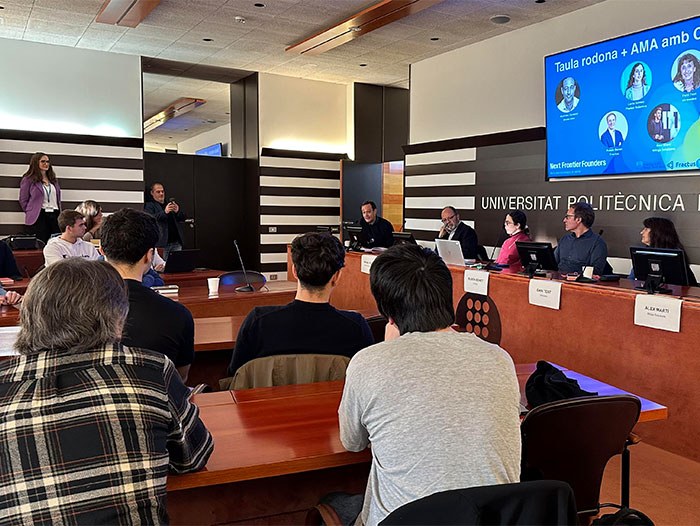
Today at Next Frontier Founders (Fractus–UPC DeepTech Hub), we hosted an Ask-Me-Anything session with a group of CEOs who studied at UPC and have since built companies in the real world—through real pressure, real uncertainty, and real trade-offs.
No buzzwords. No “overnight success” narrative. Just the hard truths of entrepreneurship, shared with generosity and clarity:
Rafa Pous (Keonn): “Starting a company is not rational—it’s like becoming a father.”
Carla Gomez (Theker): “It’s about your will to create impact in society.”
Ruben Bonet (Fractus): “You can earn more than as an employee—but it requires resilience.”
Dani Tost (Virmedex): “It’s about your passion for changing things.”
Alex Marti (Mitiga): “This is not for everyone. You’ve got to be a rebel.”
Mathieu Carenzo (IESE)
What stayed with me most was how openly they opened their hearts in front of the audience: emotions, frustrations, illusions, mistakes, motivation, and the cost of pushing forward when things don’t go to plan.
A few lessons that hit home for every founder in the room:
1) Pivoting is not a move; it’s a flight.
Alex shared a powerful image: pivoting isn’t like basketball with your feet on the floor. In a company, you’re “literally flying.” Flexibility is not optional—it’s survival.
2) Don’t fall in love with your own technology.
Carla highlighted something every technical founder needs to hear early: you may have to leave behind what you built and create something radically new. Attachment can be the enemy of progress.
3) Funding is not just money; it’s alignment.
They stressed the difference between business angels and venture capital, and how the choice shapes expectations, governance, and the founder’s reality when things get difficult.
4) Culture and vision are strategic assets.
Ruben underlined how corporate culture keeps focus—and how sharing a clear vision is essential to make employees feel part of the journey, not just hired hands.
5) Protect your team (and pay them well).
Alex spoke about the responsibility of founders to protect employees, compensate them fairly, and lead with maturity—especially under stress.
And yes, they also talked about the moments people rarely post about:
- When cash runs low and you don’t know if you’ll make it.
- When investors step back.
- When someone else decides you should no longer be CEO.
- When you lose control by chasing “small projects” that steal your time but don’t build the company.
- And when you realize that without sport, meditation, or any real disconnect, stress eventually collects its debt—physically or mentally.
We opened the session with a motivational video on the Fractus journey, founded by Carles Puente and Ruben Bonet—a reminder that even the most successful deeptech stories are built on years of perseverance.
To the UPC community: if you’re building a startup (or thinking about it), you don’t need more mythology. You need conversations like this—honest, close, and actionable.
To entrepreneurship comunity: what’s happening inside universities like UPC is not “future talent”—it’s present founders, building under pressure, learning fast, and creating impact from Barcelona to the world.
Share: